
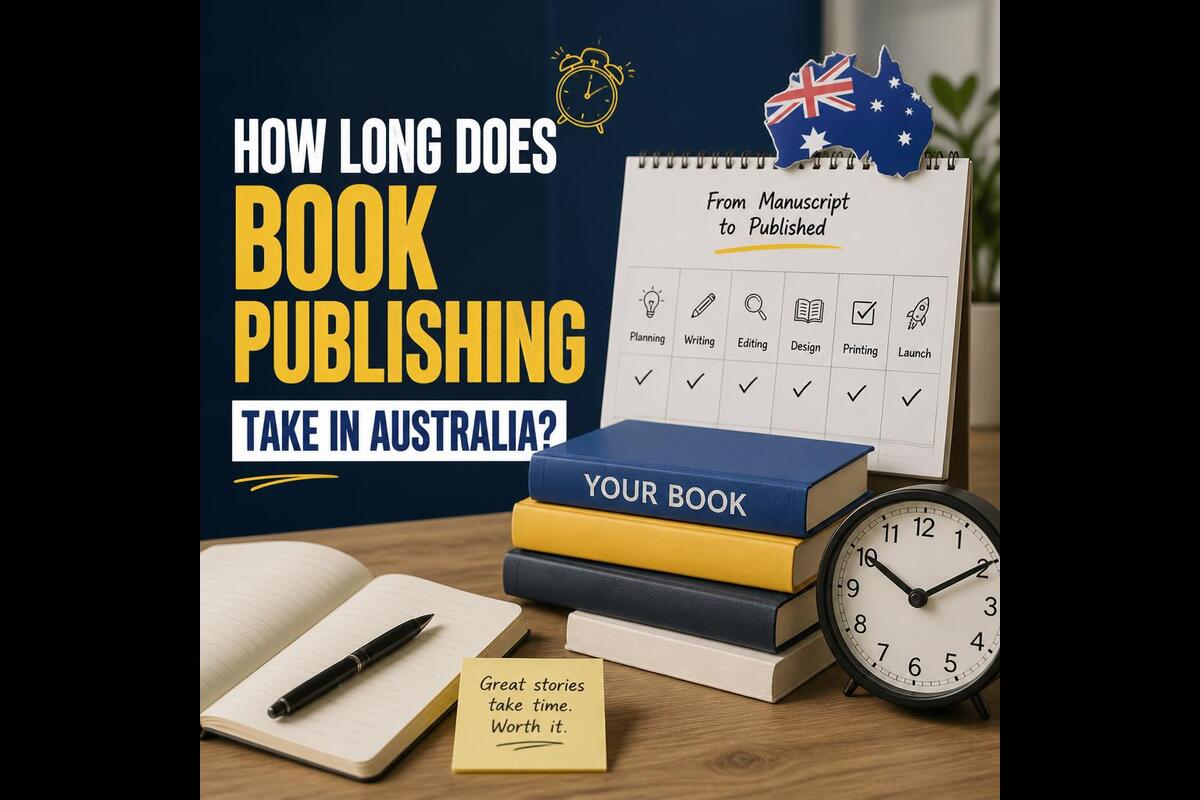
How Long Does Book Publishing Take In Australia?
When you are getting ready to publish a book, it can feel like waiting for a train when nobody has told you the timetable. Initially, you finish the manuscript, send it away and suddenly months seem to disappear. So, how much time does book publishing actually take in Australia?
The whole journey for a traditionally published book commonly takes 12 to 24 months after you sign a publishing contract, although the complete process can stretch considerably longer when you include writing, submissions, editing and finding the right publisher. Self-publishing can be much faster, but sometimes it takes only a few months from finished manuscript to printed book. This guide will walk you through the timeline for book publishing in Australia.
How Long Does Traditional Book Publishing Take In Australia?
There is no single timetable for publishing a book. A commercial novel, picture book, and specialist non-fiction title can have very different schedules, especially because editing, artwork, printing, and marketing requirements vary. Publishers assess manuscripts for originality, audience, quality and market value before they take on the financial risk of publication.
● Manuscript Assessment
It can itself take months or even years to find a publisher. Writers may submit their manuscript to several houses before receiving an offer, and many publishers only accept submissions in certain periods.
Once your manuscript is acquired, the publisher normally schedules it around its existing publishing program. A book that often misses an editorial or production deadline may therefore move to a later season instead of simply being rushed through.
● Editing
Editing is one of those stages that authors often underestimate. Developmental editing may involve substantial changes to structure, characters, pacing, argument or overall organisation.
After this, it comes to copyediting and proofreading. A straightforward manuscript can move through these stages quickly, and a complicated non-fiction project, illustrated title or heavily revised novel may need many rounds.
● Book Design
Design is not simply about to choose a nice-looking cover. You need a correctly formatted interior, images with technical specifications, and a cover that can work for both as a physical object and as a small online thumbnail.
Illustrated books may take longer time because they need to coordinate artwork, typography and page layouts. For example, recognised titles range from children’s picture books to illustrated cookbooks, showing how different production requirements can be across categories.
● Printing
Once your manuscript files are approved, the book will go to print. The actual printing time might be relatively short, but the full production schedule also includes proofing, manufacturing, corrections, freight and delivery to warehouses or distributors.
International printing can bring additional shipping time. Local printing may simplify logistics and paper availability, although price, print quantity and binding choices will still impact the schedule.
● Marketing
Marketing often begins before publication day rather than afterwards. Publishers can prepare metadata, catalogues, sales information, publicity material and retailer information while the book is still in production.
This preparation is still important. The Australian book publishers supply chain uses TitlePage to share book information with retailers, libraries and other organisations, and the platform currently has more than 1.7 million records.
What Are The Steps To Publish A Book In Australia?
You should think of publication as a chain instead of one event. You need to complete each stage before the next can properly begin, although some activities might overlap.
1. Finish And Prepare The Manuscript
Your first milestone is not about finishing your manuscript and writing “The End”. You need to make your manuscript genuinely ready for professional assessment. A strong submission should be polished, consistent and appropriate for its intended readership. When you do professional editing before submission, it can also help, especially when the manuscript still has structural or technical weaknesses.
2. Find The Right Publisher
Research is the most important step here. There are different book publishers that specialise in different genres, audiences and commercial categories. A literary novel, business book and illustrated children’s title will not necessarily belong with the same type of publishing house. It is one of the easiest ways to look at a publisher’s existing catalogue to judge whether your project fits its list.
3. Complete Editorial Revisions
Expect changes after acquisition. Even an accepted manuscript is not often considered to be finished. The author may work with an editor through several rounds, that is followed by copyediting and proofreading. This stage will protect the quality of the final book and catch inconsistencies that are easy to miss when you have lived with the manuscript for years.
4. Approve The Design And Proof
The cover, typography, page dimensions and interior layout are all you can develop during production. Authors often receive proofs to check before the final approval.
This can be particularly involved for children’s titles. All the features, including artwork, text placement and page turns, influence how the finished story works, which can help explain why children book publishers may require longer production schedules for illustrated projects.
5. Prepare Distribution And Metadata
The book needs accurate information before publication, such as its title, format, description, author, price and availability details. This information will help you feed retailers, libraries and distributors. Australian publishing industry data in 2025 showed the national metadata quality score reached 74%, and supply-chain health reached 58%, that highlight how important accurate book information has become to the retail process.
6. Print, Release And Distribute
The book is manufactured and sent into the distribution network after final approval. Publication day is therefore the visible end of a much longer process. Australian publishing is a substantial industry, with the Australian Publishers Association describing it as a sector worth around $2 billion annually and representing more than 200 publishers.
How Long Does Self-Publishing Take In Australia?
Self-publishing can reduce the timetable for book publishing because the author controls the decisions. A realistic schedule often revolves around 3 to 6 months once the manuscript is complete, although rushing can create expensive mistakes. The fastest route is not always the best route.
Editing, formatting, professional cover design, printing and distribution still need time and skipping them will make a book look unfinished. For example, poetry may need especially careful attention to page design and line breaks, and authors exploring poetry publishers in Australia should also consider whether traditional submission or independent publication better suits their goals.
Frequently Asked Questions
1. Why do publishers take so long to release accepted books?
When a manuscript gets approved, it enters a larger publishing schedule. Everybody who is involved in the process, including editors, designers, printers, distributors and marketing teams, may all be working on numerous titles simultaneously. Publishers also plan book releases around seasons, retailer schedules and expected reader demand, so an accepted book may await the right commercial window.
2. Is self-publishing faster than traditional publishing?
Yes, self-publishing is faster because the author can control the timetable. There is no process of publisher acquisition and fewer internal scheduling constraints. The trade-off is that the author needs to organise or pay for editing, formatting, design, printing, distribution and marketing, so speed relies heavily on preparation and available resources.
3. When should I start to plan my book launch?
Ideally, you should begin to plan your launch several months before publication. Retail metadata, publicity, advance copies, events, advertising and distribution all need preparation. When you wait until the book is printed, it can leave too little time to build awareness, contact reviewers or give retailers useful information before release.
Conclusion
When it comes to publishing a book in Australia, it can take anywhere from a few months to several years. That depends on the route you choose. Traditional publication commonly takes 12–24 months after acquisition, and a carefully managed self-publishing project can reach readers considerably sooner. Every stage, including editing, printing, design, metadata, distribution and legal requirements, contributes to the timeline. The best approach is to build a realistic schedule instead of chasing the earliest possible release date.

Maxien Liam works as a dedicated author for Australianpublishers, where he writes informative blogs covering publishing trends, writing techniques, and industry best practices. Maxien provides practical guidance on editing, design, printing, and distribution to help writers succeed. She helps both new and experienced authors create professional, market-ready books.